When discussing the technical terms related to Big LED screens, it can sometimes be confusing and difficult to understand. Let's take a moment to explore each of them together to gain a clearer understanding.
LED PIXEL PITCH
The LED display resolution refers to the total number of pixels displayed in each dimension, typically expressed as pixel width × height.
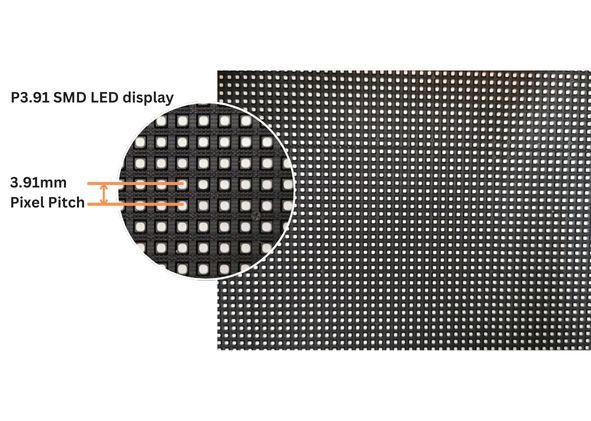
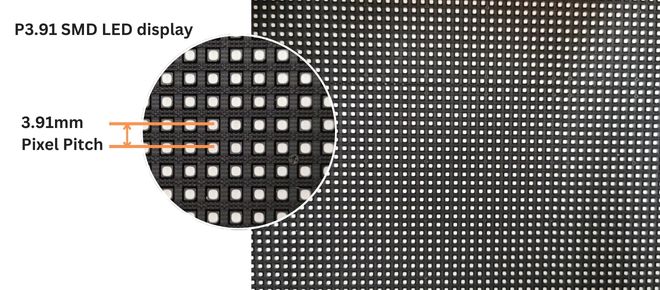
Pixel pitch denotes the measurement from the center of one LED cluster (or pixel) to the center of the subsequent LED cluster/pixel, usually measured in millimeters. It's distinct from pixel size, which pertains to the size of an individual pixel. A shorter viewing distance (or closer shooting distance) necessitates a smaller pixel pitch. (Common pixel pitch has P0.7, P0.9, P1.25, P1.53, P1.56, P1.6, P1.8, P1.95, P2, P2.5, P2.6, P2.976, P3, P3.91, P4, P4.81, P5, P6, P6.67, P8, P10.)
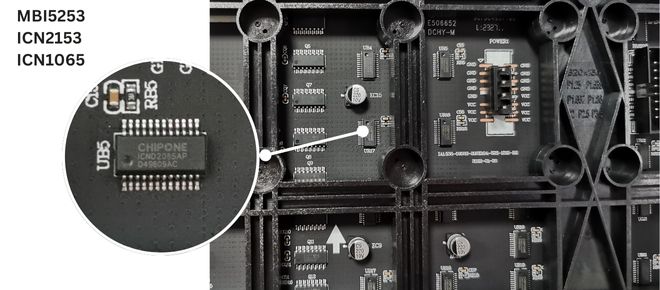
The driving IC regulates the LED, generating PWM signals to adjust the LEDs' brightness as needed. Modern driver ICs employ numerous advanced technologies to maximize LED performance.
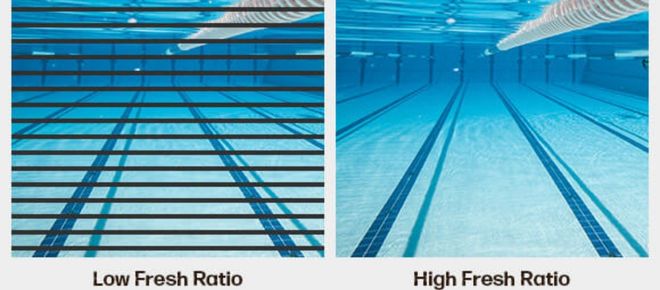
The refresh rate indicates how often per second a frame is refreshed on the display. (Usually measured in hertz, such as 1920, 3840, or 7680Hz)
Scan rate, also referred to as scan mux or multiplexing, involves one driver IC output pin controlling multiple LEDs. This is achieved by sequentially activating each LED one at a time (multiplexing). In a single refresh cycle, all LEDs will illuminate once. Common scan rates include 64:1, 32:1, 16:1, 8:1, 4:1, and 2:1.
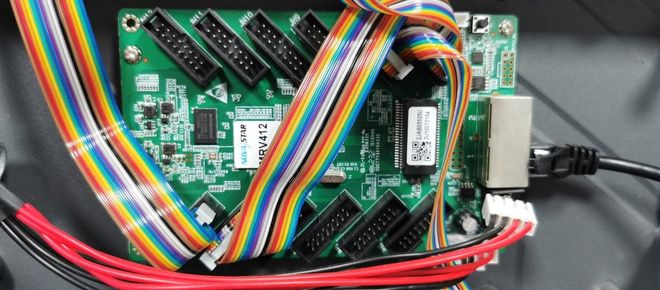
The receiving card serves as the intermediary between the LED sending box/ LED processor (which contains the video input) and the driver ICs (linked to the LEDs and video output). Beyond decoding and distributing the video signal, the receiver card undertakes various additional corrections, including adjustments for brightness, gamma, calibration, and more.
The color gamut, often referred to as "the color triangle," represents the range of colors that can be displayed. A larger surface area covered within this triangle by your LED panel indicates the ability to showcase a wider array of colors.
Contrast refers to the variation in luminance or color that enables the distinction of an object or its depiction in an image or display.
Frame rate denotes the frequency of frames displayed per second, typically dictated by the video source (Typically, 24, 50, 60, 120Hz)
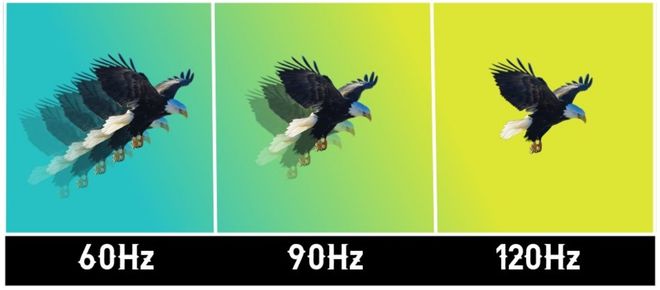
Scan lines refer to the visible lines perceived by the eyes or captured by a camera when the refresh rate is insufficient. Cameras are more sensitive to detecting scan lines compared to our eyes. Generally, higher refresh rates are preferred, and synchronizing (genlocking) the refresh rates between the screen and camera may be necessary.